
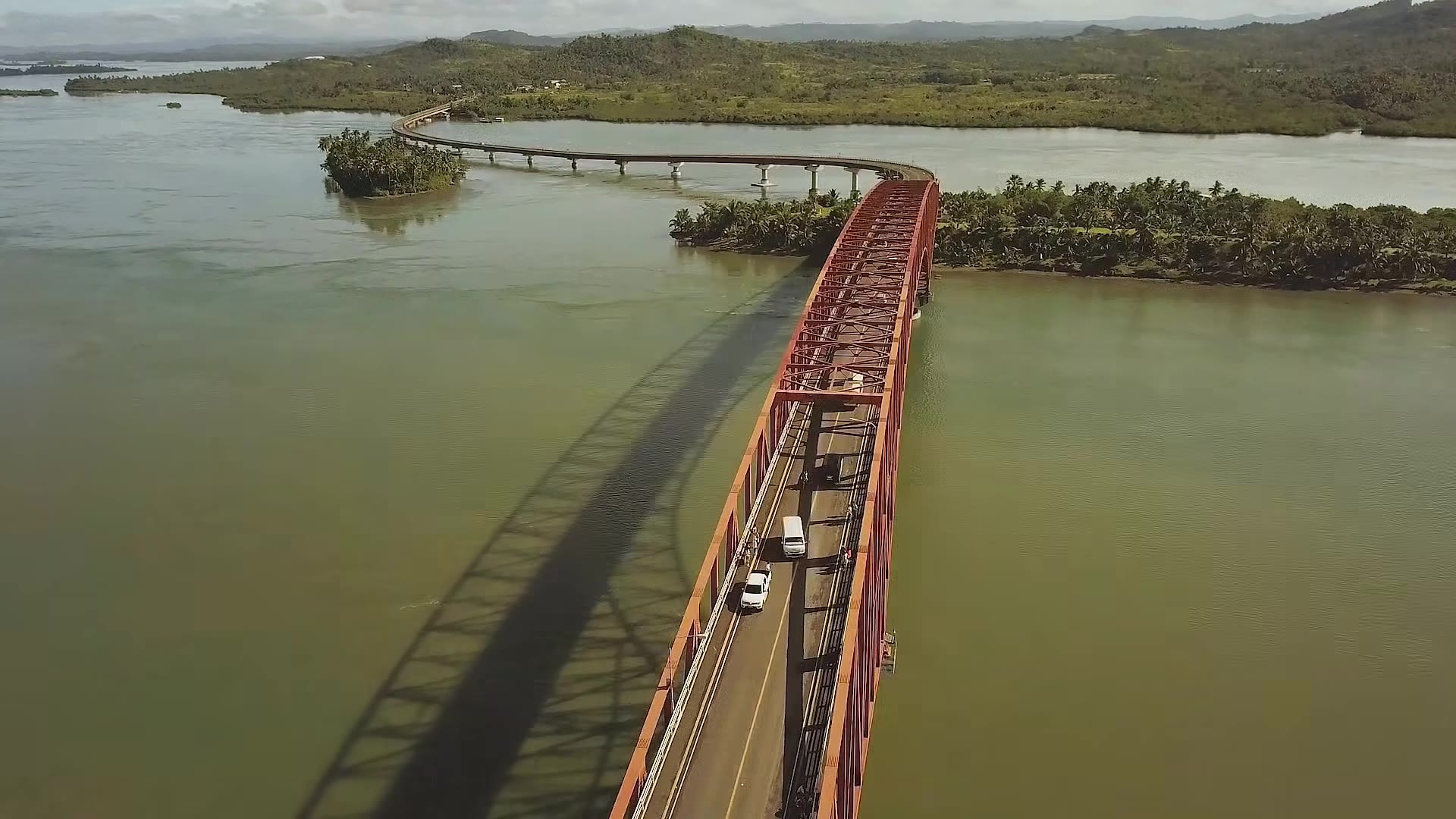
Cross the San Juanico and the country quietly changes. Samar does not announce itself. It waits — in limestone gorges and jade water, in the slow hands that still weave the islands into something you can carry.
The longest bridge in the Philippines does not feel like infrastructure. From the air it is a red ribbon laid across the water between Leyte and Samar, and to cross it on foot is to feel the moment one island lets you go and another takes you in.
On the far side, Samar keeps its own time. The road gives way to a bamboo walk above a spring, and the green closes overhead. There is birdsong, and little else. The island asks you, gently, to slow down — which is the only way it can be properly seen.
And then there is the weaving. What the eye first reads as fashion is, underneath, an inheritance: the banig mat, softened and reshaped by hand into a bag carried easily into a city evening. The weave is the same one a grandmother knows.
This is the Samar we wanted to show — not a checklist of sights, but a feeling. The bridge, the water, the woven thing held close. A place that rewards the traveller who arrives unhurried, and leaves carrying more than they came with.